Lift Equipment & Site Products in Colorado Springs, CO
Plan by height, reach, surface, and access. Colorado Springs altitude, wind, and mixed terrain often decide between slab electric units and rough‑terrain options.
Start with the task geometry: height, horizontal reach, and whether the machine can sit below the work or must ride directly under it. Colorado Springs combines secure industrial facilities, large distribution floors, and variable exterior grades. That mix—plus frequent wind and elevation—shapes which lift or site product fits.
Decide by work position and surface
Directly under the task on smooth slab: electric scissors provide straight-up vertical access with compact footprints. See /electric-scissor-lift-rental/.
Exterior or uneven ground with vertical access: rough-terrain scissors bridge grade and surface variation. See /rough-terrain-scissor-lift-rental/.
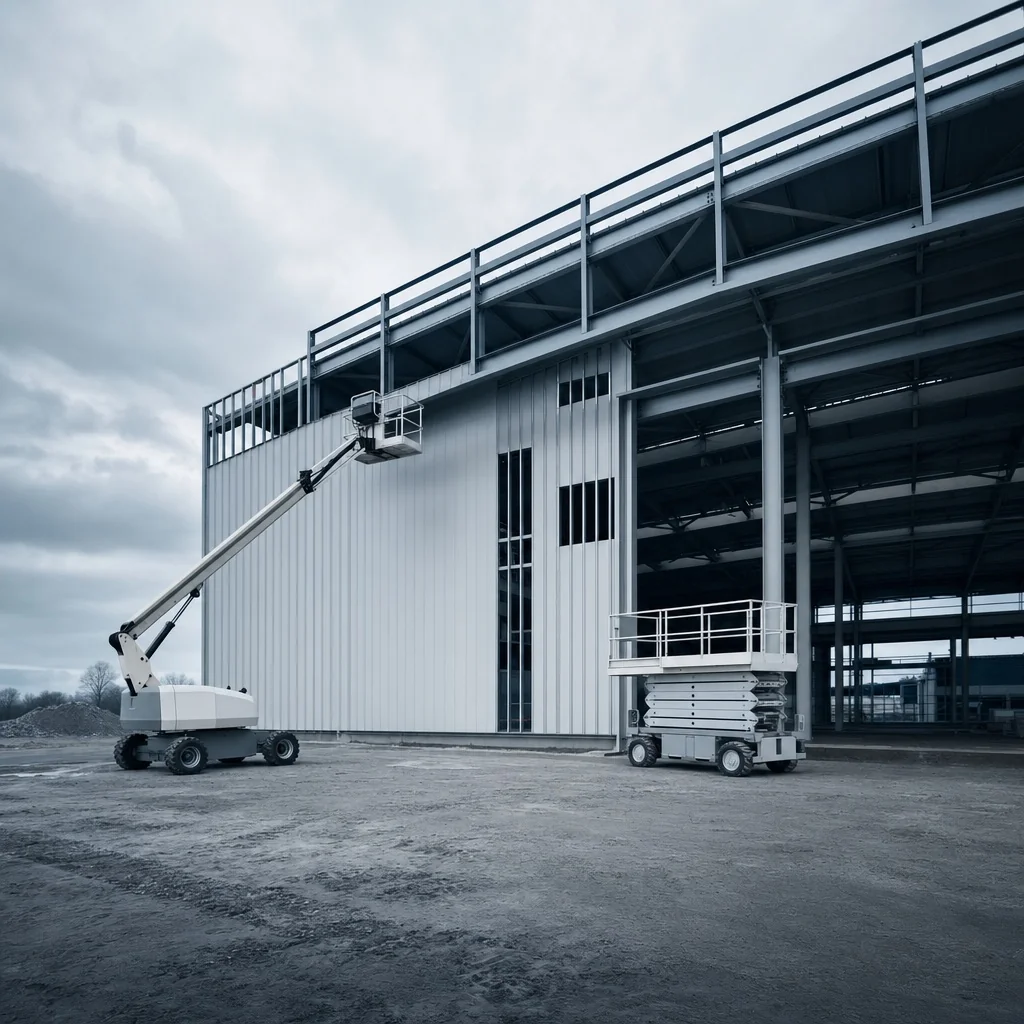
Over obstacles or across roof edges: booms add horizontal reach. For general needs see /boom-lift-rental/; for tight approach angles see /articulating-boom-lift-rental/; for longer straight reach see /telescopic-boom-lift-rental/.
Low-height picks in racks or tight corridors: vertical mast options fit narrow aisles. See /vertical-mast-lift-rental/.
Material placement at height on exterior sites: see /telehandler-rental/. For pallet and dock handling on slab, see /forklift-rental/.
Local conditions that change the comparison
Altitude: internal combustion machines can show reduced performance margins; confirm load, gradeability, and reserve power needs.
Wind: frequent gusts on open aprons make wind ratings and exposure a deciding factor for elevated platforms and mast lighting. Actual conditions, each unit’s instructions, and site procedures govern.
Terrain split: expanding industrial parks favor slab-on-grade for electric equipment, while foothill edges often need rough-terrain capability.
Site products that support lift work
Power and lighting for early starts or night shifts: /generators-light-towers-rental/
Secured storage for parts and tooling near docks or controlled compounds: /storage-containers-rental/
Perimeter and pedestrian flow around active lift zones: /temporary-fencing-barricades-rental/
Measurements to confirm before you call
Working height and any required horizontal reach
Maximum platform load or material weight at height
Surface type, slope, and the most exposed wind segment
Access path: gate width, door height, and turning radii
Power needs, lighting coverage, and any security constraints
Equipment questions
Questions about Colorado Springs planning
How does elevation in Colorado Springs affect aerial equipment selection?
Combustion-powered units can have less performance margin at altitude. That can influence lift speed, grade handling, and power reserve. Match the machine to the load and terrain with added headroom.
When is an electric scissor preferred over a boom locally?
On level slab with straight-up work—such as inventory or light maintenance—an electric scissor is compact and efficient. Booms become necessary when the task sits offset from the machine or over an obstruction.
What if exterior winds vary through the day?
Treat the most exposed period as the planning case. Wind exposure, the selected unit’s instructions, and site procedures determine whether the work window and platform type are acceptable.