Define the placement task
- Load weight and dimensions: confirm the heaviest unit you plan to place.
- Lift height and reach: identify the highest pick point and any required outreach over a slab edge or scaffold.
- Approach path: measure gate widths, turning radii, and slope transitions to staging.
Local site conditions that change capacity in practice
- Variable terrain reduces effective placement if you cannot set level. Rough-terrain capability and tire type are common needs on exterior sites.
- Gusty conditions at elevation can limit boom extensions. The model’s charts and site procedures govern allowable placements.
- Sensitive industrial campuses may require clean fluids, drip containment, or low-emission operation near designated areas.
Spec considerations for Colorado Springs projects
- Rated operating capacity at maximum reach: verify against the heaviest expected pick with margin.
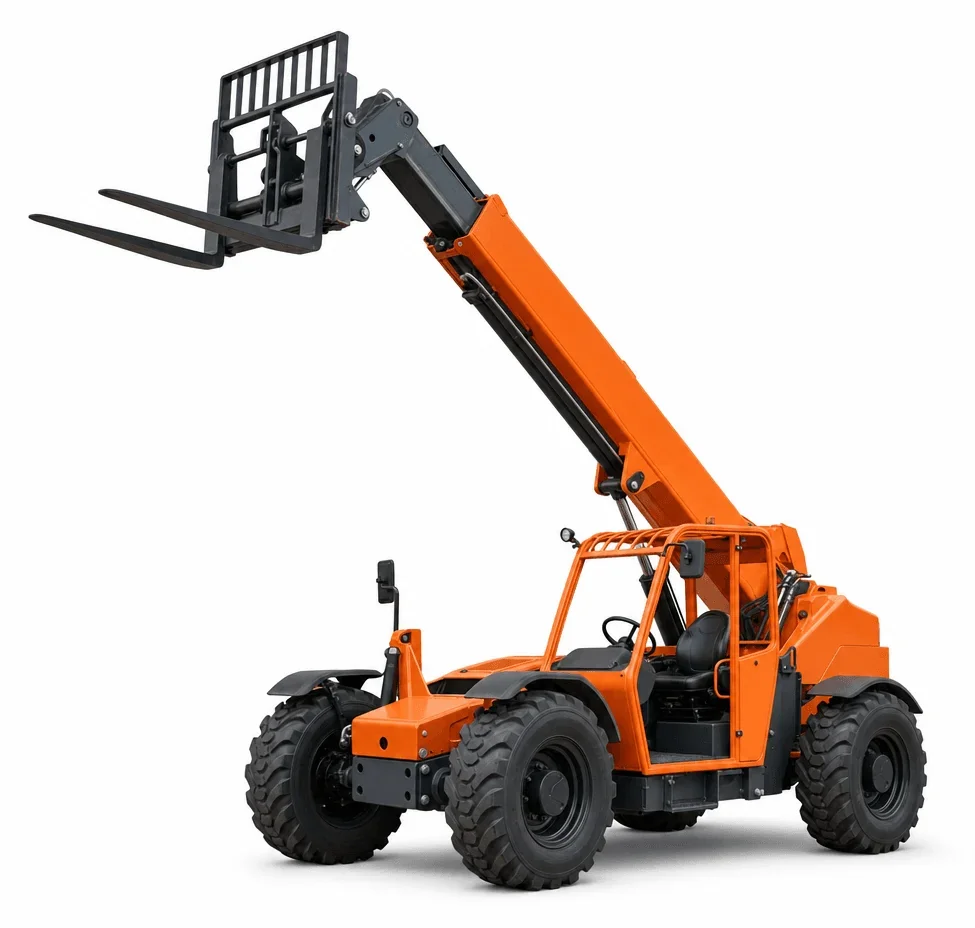
- Attachment interface and fork length: ensure compatibility with pallet and load geometry. (Attachment use is governed by the manufacturer; confirm requirements.)
- Overall height and width: confirm access under canopies and through temp gates.
- Ground clearance and wheelbase: helpful on rutted approaches to building pads.
Where telehandlers fit locally
- Structural and envelope work on new construction with uneven approaches.
- Material drops at second-story decks in developing industrial parks.
- Mechanical and electrical setouts where a crane is impractical for short-duration picks.
Related categories to review
- For personnel access to elevated tasks, compare /telescopic-boom-lift-rental/ and /articulating-boom-lift-rental/.
- For pallet movement on finished slabs, see /forklift-rental/.
Exterior lifting depends on site conditions, the selected unit’s instructions, and on-site procedures under changing weather.